

A survey by the TIAA Institute found that only 34% of Americans could correctly answer basic financial literacy questions covering concepts like compound interest, inflation, and diversification. These are not obscure academic topics — they are the foundational knowledge needed to navigate modern financial life. Student loans, mortgages, retirement accounts, credit cards — the average person encounters all of these by their early 30s, usually without adequate preparation.
Formal education has largely failed to fill this gap. Most schools teach algebra, history, and literature — valuable subjects — but not how to file taxes, understand a paycheck, or avoid a high-interest loan. The gap falls to parents. The good news is that financial education does not require expertise or formal curriculum. It requires consistent, age-appropriate conversations and practical experiences that children can absorb and apply throughout their lives.
Why Early Financial Education Matters
Research from Cambridge University found that money habits and attitudes are established by age 7. Children’s understanding of financial concepts like delayed gratification, earning, and saving is shaped in the early childhood years — not during a high school economics class. By the time most people receive any formal financial education (if they receive it at all), their money mindset has already been deeply formed by observation and experience.
Children who learn about money management early are more likely to save regularly as adults, carry less debt, make better investment decisions, and experience lower financial stress throughout their lives. The ROI of financial education for children may be the highest of any investment a parent makes.
Ages 3–6: Laying the Foundation
Children at this age can begin understanding coins and basic value. Keep lessons concrete and tactile:
- Name the coins: Let them handle real coins. A penny, nickel, dime, quarter — teach the names and approximate values in simple terms.
- The “trade” concept: When shopping, explain that money is how we trade for things we want. “We give the cashier money, and they give us the groceries.”
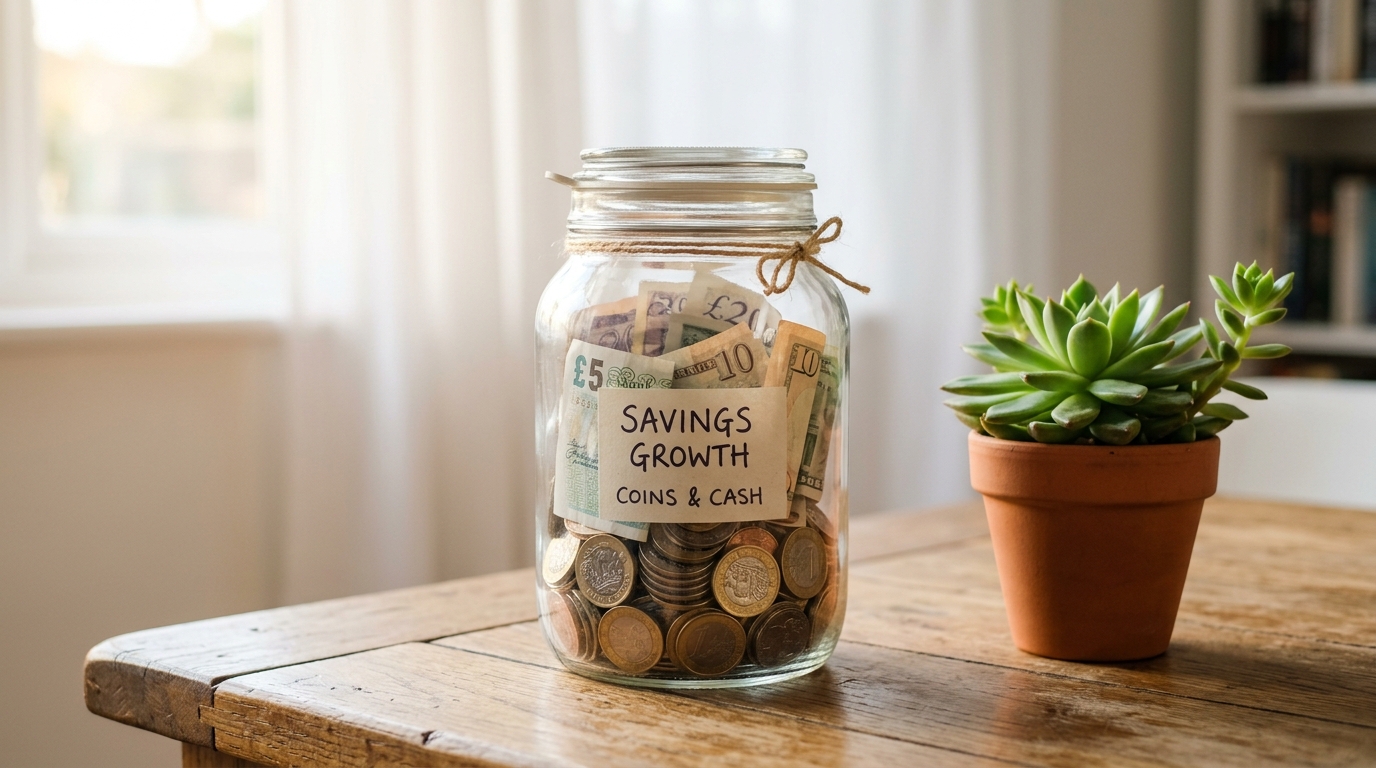
- Three jars: Set up three transparent jars labelled “Spend,” “Save,” and “Give.” When children receive any money (birthday gifts, coins from grandparents), they allocate it among the three jars. This creates the saving and giving habits early, before the wanting habit overwhelms everything else.
Ages 7–12: Building Real Understanding
This is the critical window identified by Cambridge research — and it is when practical financial skills should be introduced:
- Regular allowance: A consistent weekly allowance teaches budgeting, delayed gratification, and the connection between money and choice. The amount matters less than the consistency and the expectation that it must be managed. Many families use allowance amounts of $1–$2 per year of age per week ($7–$14/week for a 7-year-old).
- Earn extra income: Allow children to earn additional money through optional extra chores above their basic household responsibilities. This introduces the concept that additional effort creates additional income — one of the most important work-life lessons.
- Bank account: Open a children’s savings account and take them to deposit their savings. Show them the passbook or online balance. Explain how interest works: “The bank pays us a little money because they use our savings for other things while we are saving.”
- Shopping decisions: Involve children in simple shopping decisions. “We have $20 for snacks this week — what should we get?” The experience of making real allocation decisions with real constraints is invaluable.
Ages 13–17: Real Financial Skills
Teenagers are ready for more sophisticated financial concepts and real financial responsibility:
- First job: A part-time job teaches the relationship between time and money, the reality of tax withholding, and the satisfaction (and constraints) of earned income. Encourage saving at least 20% of every paycheck from the first one.
- Budgeting their own money: Teenagers receiving a clothing budget (rather than parents buying everything) learn to prioritize spending, find deals, and experience the consequence of overspending early — while the stakes are low.
- Introduction to investing: Explain how the stock market works. Consider opening a custodial investment account and purchasing one share of a company they know (Apple, Nike, Disney). Watching a real investment go up and down makes finance tangible and engaging.
- Credit explained: Explain credit scores, how they are built, and how they affect borrowing costs. “A person with a 750 credit score pays half the interest rate on a car loan than someone with a 600 score — meaning thousands of dollars less over the life of the loan.” This statistic lands very differently when you are 16 and thinking about your first car than when you are 30 and already have a low score.
Ages 18+: Financial Independence Preparation
Before children leave home for college or work, ensure they understand:
- How to file taxes (walk through their first return together)
- How health insurance works: premiums, deductibles, co-pays, networks
- The actual cost of student loans: show the amortization calculator with their potential debt
- How a 401(k) works and why they should contribute from their first job
- How to read a lease and understand rental obligations
- The compound cost of credit card debt at 22% APR vs. paying balances in full monthly
Recommended Books for Children on Money
- The Berenstain Bears’ Trouble with Money (Ages 4–8)
- Rock, Brock and the Savings Shock by Sheila Bair (Ages 6–10)
- Lemonade in Winter by Emily Jenkins (Ages 5–9)
- Rich Dad Poor Dad for Teens by Robert Kiyosaki (Ages 12+)
- I Will Teach You to Be Rich by Ramit Sethi (Ages 18+, college)
Financial literacy is one of the few gifts parents can give that compounds over an entire lifetime. The earlier it starts, the greater the impact. Use our savings calculator with your children to help them visualize what their savings could grow into — and watch the motivation that comes from seeing their own financial future take shape.
Mastering Your Financial Trajectory: A Comprehensive Strategy
Understanding the specific mechanics of the financial topic discussed above is only the first step. True financial independence requires integrating these concepts into a broader, holistic wealth-building framework. The following step-by-step guide is designed to help you connect the dots between saving, investing, debt management, and psychological discipline to secure your financial future.
Step 1: Establishing a Rock-Solid Financial Foundation
Before deploying capital into advanced investment vehicles, you must build a bulletproof safety net. An emergency fund is not merely a savings account; it is your financial armor against the unpredictability of life. Financial planners universally recommend keeping 3 to 6 months of essential living expenses liquid. For example, if your baseline monthly expenses (housing, food, utilities, insurance, minimum debt payments) total $4,000, your target emergency fund should be between $12,000 and $24,000.
This money should not be invested in the stock market where it could lose value right when you need it most. Instead, keep it in a High-Yield Savings Account (HYSA) or a money market fund where it can earn a competitive APY (Annual Percentage Yield) while remaining immediately accessible. This fund prevents you from going into high-interest credit card debt when the furnace breaks or a medical emergency arises.
Step 2: Strategic Debt Elimination (Avalanche vs. Snowball)
High-interest consumer debt is the single greatest destroyer of wealth. It represents compound interest working violently against you. Consider two popular, highly effective methods for eliminating it:
- The Debt Avalanche Method: You list all your debts and focus every extra dollar on the one with the highest interest rate, while making minimum payments on the rest. Mathematically, this is the optimal path and saves the most money in interest.
- The Debt Snowball Method: You focus on paying off the smallest balance first, regardless of the interest rate. Once it is paid off, you roll that payment into the next smallest debt. This method creates powerful psychological momentum and quick wins, which often keeps people motivated.
Worked Example: Suppose you carry a $6,000 credit card balance at a 24% APR. Making only a $120 minimum monthly payment will take you over 9 years to pay off the balance, costing you an astonishing $7,500 in interest alone! By tightening your budget and doubling your payment to $240, you cut the repayment time to under 3 years and save over $5,000.
Case Study: The Asymmetric Impact of Early Action
To truly grasp the power of long-term planning, let’s examine a real-world comparison of two hypothetical investors, Sarah and Mark.
| Attribute | Sarah (Started at Age 25) | Mark (Started at Age 35) |
|---|---|---|
| Monthly Investment | $400 | $800 |
| Total Invested by Age 65 | $192,000 | $288,000 |
| Total Value (Assuming 8% Annual Return) | $1,396,000 | $1,192,000 |
This table illustrates a profound reality: despite investing $96,000 less out of pocket, Sarah ends up with over $200,000 more than Mark. Time in the market is an exponentially more powerful force than the raw amount of capital deployed.
Advanced Wealth Building: The Necessity of Diversification
Diversification is often referred to as the only free lunch in investing. By spreading your capital intelligently across different asset classes, you significantly reduce your portfolio’s volatility and risk while maintaining a strong potential for long-term growth. A well-constructed portfolio typically includes a mix of:
- Equities (Stocks): These represent fractional ownership in real businesses. They offer the highest long-term growth potential but come with significant short-term volatility. Broad-market index funds are the most efficient way to capture this growth.
- Fixed Income (Bonds): These are essentially loans you make to governments or corporations. They provide lower, steadier returns and act as a shock absorber for your portfolio during stock market crashes.
- Real Estate: Whether physical properties or Real Estate Investment Trusts (REITs), real estate provides a hedge against inflation, steady cash flow, and historical appreciation.
Actionable Advice: Optimizing Your Tax Strategy
For most successful professionals and business owners, taxes will be the single largest expense of their lifetime. Legally minimizing your tax burden through advantaged accounts can dramatically accelerate your path to wealth.
- Pre-Tax (Tax-Deferred) Accounts: Contributions to a Traditional 401(k) or Traditional IRA lower your current year’s taxable income. The money grows tax-deferred, and you only pay taxes upon withdrawal in retirement, ideally when you are in a lower tax bracket.
- Post-Tax (Tax-Free) Accounts: Contributions to a Roth IRA or Roth 401(k) are made with money that has already been taxed. The massive benefit is that all future growth, dividends, and withdrawals in retirement are 100% tax-free.
The Psychology of Money: Your Greatest Asset or Liability
Financial success is widely considered to be 20% head knowledge and 80% behavioral discipline. The most sophisticated, mathematically perfect financial plan will inevitably fail if it is sabotaged by emotional decision-making. Be aware of these common behavioral pitfalls:
- Loss Aversion: Human psychology dictates that the pain of losing $1,000 is twice as intense as the joy of gaining $1,000. This cognitive bias drives investors to panic-sell at the bottom of a market crash, locking in their losses.
- Lifestyle Creep: Also known as lifestyle inflation, this occurs when your standard of living improves as your discretionary income rises. If every raise or bonus is immediately absorbed by a more expensive car or a bigger house, you will remain on the treadmill, unable to build lasting wealth. Combat this by automating your savings.
- Recency Bias: The tendency to believe that whatever the market has been doing recently (whether booming or crashing) will continue indefinitely. History proves that markets are cyclical.
Frequently Asked Questions (FAQs)
Q: How much of my income should I be saving?
A: A solid starting point for beginners is the 50/30/20 rule: allocate 50% to essential needs, 30% to discretionary wants, and 20% to savings and debt repayment. However, if your goal is early retirement (FIRE) or catching up on a late start, you will likely need to push your savings rate to 30%, 40%, or beyond.
Q: Is it better to pay off my mortgage early or invest the extra money?
A: This is a classic debate between math and psychology. Mathematically, if your mortgage interest rate is low (e.g., below 4%), you are generally better off investing extra cash in the stock market, which has historically returned 7-10% annually. However, from a psychological perspective, the peace of mind that comes with owning your home outright and being completely debt-free is invaluable to many people. The “best” choice is the one that lets you sleep at night.
Q: How frequently should I monitor my investment portfolio?
A: For long-term investors, checking your portfolio less often is usually better. Daily monitoring often leads to emotional stress and the temptation to tinker with your strategy. Aim to review your portfolio thoroughly and rebalance your asset allocation just once or twice a year.
Q: Does real estate outperform the stock market?
A: Both asset classes have minted millions of wealthy individuals, but they serve different purposes. Stocks are highly liquid, incredibly passive, and offer excellent long-term growth. Real estate involves less liquidity, acts more like a part-time business, but offers powerful leverage, unique tax benefits, and steady rental cash flow. A truly robust financial portfolio often includes exposure to both.
Final Thoughts on Financial Empowerment
Building meaningful, generational wealth is not about extreme deprivation or winning the lottery; it is about deliberate prioritization. It requires choosing what matters most to you and aligning your spending habits with your long-term values. Education is merely the first step; consistent execution is what transforms your reality. Start where you are, automate your positive financial behaviors, and allow the unstoppable force of compound interest to work in your favor over the decades.
This article is for educational purposes only and does not constitute financial advice. Please consult a qualified financial advisor for personalized guidance.